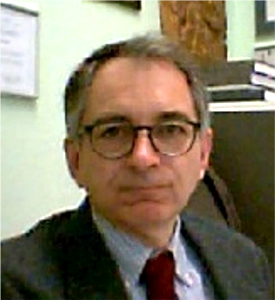
Dario Ambrosini
 |
Nome: Dario
Cognome: Ambrosini Qualifica: Professore ordinario Settore Scientifico Disciplinare: ING-IND/11 (Fisica Tecnica Ambientale) Struttura di afferenza: Dipartimento di Ingegneria industriale e dell'informazione e di economia Email: dario.ambrosini  univaq.it univaq.it
Telefono Ufficio: +39 0862434323 Altro telefono: +39 0862434336 Fax Ufficio: +39 0862434303 Pubblicazioni: https://ricerca.univaq.it/cris/rp/rp03483 Home Page personale: https://orcid.org/0000-0002-8905-0316 |
| Insegnamento | Orario di ricevimento |
|---|
Curriculum scientifico
(Aggiornato il 14-05-2026) versione stampabile (pdf)
 Short Bio
Dario Ambrosini is Full Professor of Thermal Sciences, Energy Systems and Building Physics at the Department of Industrial and Information Engineering and Economics (DIIIE) of the University of L’Aquila, Italy. His research spans thermal sciences, energy efficiency in buildings, and non‑conventional optical imaging for diagnostics. He has pioneered and contributed to the developments of several innovative approaches, including speckle‑pattern interferometry for artwork diagnostics and flow visualization, background‑oriented schlieren techniques (including the Hidden-grid BOS formulation), and thermal quasi‑reflectography (TQR), a mid‑infrared reflective imaging paradigm extending classical approachs. His work integrates optical metrology and heat transfer to extract hidden information from complex systems, with applications ranging from fluid dynamics and the built environment to cultural heritage. He is a Fellow of SPIE and Optica, is listed among the Stanford/Elsevier Top 2% Scientists, and serves as Deputy Editor of Optics and Lasers in Engineering.
Publications and Metrics
Prof. Ambrosini's scientific production includes journal papers, conference proceedings, book chapters and invited contributions.
Publication Repositories and Bibliometric Profiles
Primary institutional sources
- Full Publication List (UNIVAQ Repository)
- ORCID Profile
- Laboratory Website (LAS.E.R. & Technical Physics Laboratories)
- LinkedIn Profile
- SPIE Professional Profile
- ResearchGate Profile
- Academia.edu Profile
Stanford/Elsevier Top 2% Scientists
Full Bio
Profile
Dario Ambrosini graduated in Electronic Engineering from Sapienza University of Rome (Italy), with an experimental thesis on optical information processing using the Talbot effect and Talbot interferometers (Advisor Prof. Franco Gori). He is Full Professor of Thermal Sciences, Energy Systems and Building Physics at the University of L’Aquila. He is a Fellow of SPIE and Optica, is included in the Stanford/Elsevier Top 2% Scientists ranking, received the SPIE Rudolf and Hilda Kingslake Award in Optical Design (2001), and serves as Deputy Editor of Optics and Lasers in Engineering. He is active in national and international scientific societies.
His research activity is centered on the development of non‑conventional optical imaging and diagnostic methods for the analysis of complex systems. He has pioneered and contributed to several innovative approaches in optical diagnostics, including speckle‑pattern interferometry applied to artwork diagnostics and flow visualization, background‑oriented schlieren techniques, and thermal quasi‑reflectography (TQR), a mid‑infrared reflective imaging paradigm.
In parallel, he has contributed extensively to thermal sciences and energy analysis of buildings, with work on innovative measurement techniques (including thermographic methods for U‑value assessment), advanced materials and manufacturing processes, and the integration of building energy modeling approaches (BIM–BEM).
These contributions have enabled the extraction of otherwise inaccessible information across fundamentally different domains, including fluid dynamics, energy systems and the built environment, and cultural heritage. His methods have been applied to the investigation of major works of art by leading Italian masters and to significant architectural sites, providing new insights into materials, techniques, and conservation.
His work integrates optical metrology with heat transfer, with a strong emphasis on non‑destructive testing and interdisciplinary approaches. He is a founding member of Heritechne, an interdepartmental center of the University of L’Aquila dedicated to innovative methods and technologies for cultural heritage investigation.
Academic Positions
- Full Professor of Thermal Sciences, Energy Systems and Building Physics, University of L’Aquila, Italy, since 2020
- Associate Professor, University of L'Aquila, 2006–2020
- Researcher in Thermal Engineering and Industrial Energy Systems, University of L'Aquila, 1995–2006
- Associate Researcher, ISASI CNR, Pozzuoli, Italy, 2016–2021
- Visiting Researcher, EPFL – École Polytechnique Fédérale de Lausanne, Lausanne, Switzerland, 2009-2016 (one week/year)
- Collaborator, Optics Laboratory, Sapienza University of Rome, Italy, 1993-1995
- Head of the LAS.E.R. Laboratory, University of L'Aquila (since 2017)
- Head of the "Gino Parolini" Technical Physics Laboratory, University of L'Aquila (since 2015)
- External member of the OpDATeCH Lab - Optical Devices and Advanced Techniques for Cultural Heritage, at the University of Verona (Italy).
Research Interests
- Non‑conventional optical imaging and diagnostics (speckle interferometry, background‑oriented schlieren, infrared thermography, and thermal quasi‑reflectography)
- Thermal sciences and energy systems (heat and mass transfer, building physics, U‑value assessment, 3D‑printed insulating materials, BIM–BEM integration)
- Diagnostics for cultural heritage and complex materials (non‑destructive testing and optical–thermal methods applied to artworks and historical structures)
- Flow visualization and optical measurement techniques
- History of science and engineering
Honors and Awards
- Fellow, Optica (formerly OSA), 2023
- Fellow, SPIE – The International Society for Optics and Photonics, 2019
- SPIE Rudolf and Hilda Kingslake Award in Optical Design, 2001
- Stanford/Elsevier Top 2% Scientist (multiple years)
- Optica Outstanding Reviewer Recognition, 2016
- SPIE Community Champion, 2019
- Senior Member, OSA and SPIE, 2013
Membership in Scientific Societies
- SPIE – The International Society for Optics and Photonics, since 1998
- Optica – Advancing Optics and Photonics Worldwide, since 2011
- Sigma Xi – The Scientific Research Honor Society, since 2015
- UIT – Italian Union of Thermal Fluid Dynamics, since 1998
- FTI – Associazione della Fisica Tecnica Italiana, since 2014
- IIC – International Institute for Conservation of Historic and Artistic Works, 2004-2011
Editorial Roles
- Deputy Editor, Optics and Lasers in Engineering, since 2026 (Editor, 2025; Associate Editor, 2019-2024; Editorial Board Member, 2007-2019)
- Editorial Board Member, Energies, since 2023
- Editorial Board Member, Heritage, 2019
Guest Editor Activities
- (with Kyung Chun Kim and Pascal Picart) "Flow visualization: state of the art and new perspectives", Optics and Lasers in Engineering, 2022 - 2023.
- (with S. Sfarra) "Novel Idea for Infrared Thermography also Applied in Integrated Approach", Applied Sciences vol. 8, 2018.
- (with Pietro Ferraro) "Optical tools for metrology, imaging and diagnostics", Optics and Lasers in Engineering vol. 104, pp. 1-304, May 2018.
- (with D. Paoletti, S. Sfarra) "33rd UIT (Italian Union of Thermo-fluid dynamics) Heat transfer Conference", Journal of Physics: Conference Series vol. 655, October 2015.
- (with Jean-Pierre Prenel) "Advances in flow visualization", Optics and Lasers in Engineering vol. 50, pp. 1-98, January 2012.
- (with Pramod Kumar Rastogi) "Diffusion measurements by optical methods: Recent advances and applications", Optics and Lasers in Engineering vol. 46, pp. 849-920, December 2008.
- (with Pramod Kumar Rastogi) "Optical methods in Heat Transfer and Fluid Flow", Optics and Lasers in Engineering vol. 44, pp. 155-350, March-April 2006.
Scientific Organization and Service
- National Secretary, UIT - Italian Union of Thermal Fluid Dynamics, 2023-2028
- Member, Steering Committee of UIT - Italian Union of Thermal Fluid Dynamics, 2017-2028
- Member, Steering Committee of FTI - Associazione della Fisica Tecnica Italiana, 2026 - 2028
- Member, Scientific Council CIRIAF since 2002, representative of the University of L'Aquila since 2020
- University of L'Aquila representative to the National Energy Technology Cluster (CTNE), since 2021
- Member, Program Committee of the SPIE biennial Conference "O3A: Optics for Art, Architecture and Archaeology", 2013-2025
- Editor of the UIT monthly e-Newsletter, since October 2018
- Session Chair and member of Scientific and Program Committees in national and international conferences